
Quiet Biology is not a clinic. It is not a charity. It is not a campaign.
It is what happens when a patient decides to properly understand his own disease.
Prostate cancer is among the most researched cancers in the world. The literature is vast, the biology is increasingly well understood, and the evidence base for individualised management is substantial and growing. Almost none of this reaches the man sitting in the consulting room with a new diagnosis and a frightened partner beside him.
Quiet Biology exists because of that gap.
A biopsy, a diagnosis, a question.
In 2019, a routine check-up led to a biopsy, a diagnosis, and a recommendation that felt, in the moment, like the only available response. It was not. What was missing was not access to good clinicians. It was the biological literacy to evaluate what they were recommending and why.
The research that followed took two years and produced two books, a twenty-five-paper scientific framework, a white paper, five foundational papers, and twenty framework papers, and a Substack series read by men with prostate cancer, their partners, and the clinicians who treat them. Quiet Biology is the collected result of that inquiry, organised, accessible, and honest about the limits of what it knows.
A framework for understanding prostate cancer as an individual disease rather than a population statistic.
A body of writing that moves from plain language to rigorous science depending on what the reader needs.
A resource built in collaboration with clinicians , integrative, urological, and oncological, who share the conviction that the individual patient deserves a more complete account of his own biology than the standard clinical encounter typically provides.
The Quiet Biology framework does not propose to replace established clinical care. It proposes to sit alongside it , giving the man with a diagnosis, and the clinicians who support him, the individual biological layer that population medicine was never designed to deliver.
It is not a treatment protocol. It is not a claim to have found something medicine has missed. It is not wellness content dressed in scientific language.
Every paper in the framework is explicit about the limits of its evidence. Every article is written with the understanding that biological complexity does not resolve into simple answers.
The goal throughout is not reassurance. It is understanding , the kind that allows a man to make genuinely informed decisions about his own biology, in collaboration with the clinicians responsible for his care.
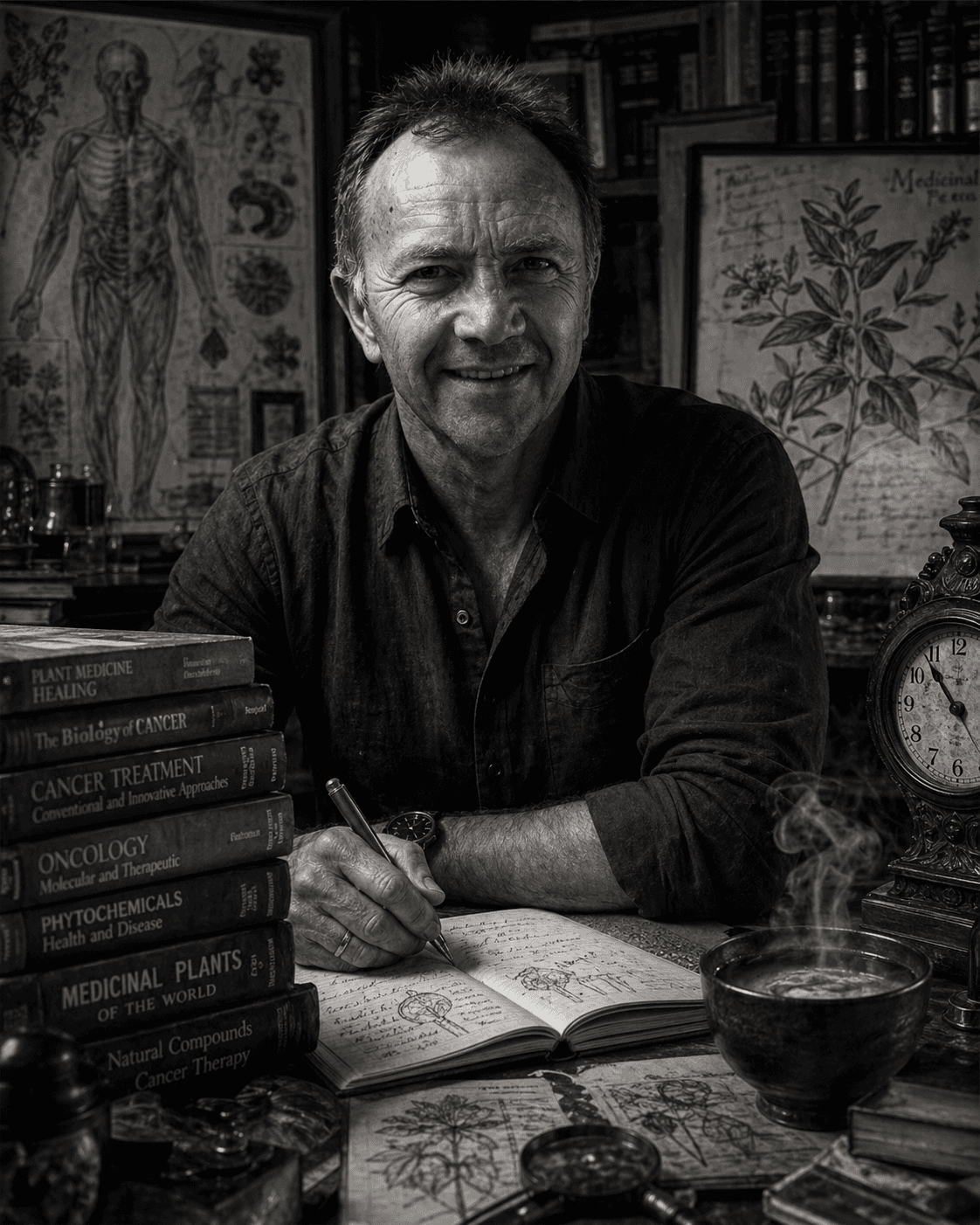
Finley Proudfoot
Finley Proudfoot is a writer and patient advocate based in Cape Town, South Africa. He was diagnosed with prostate cancer in 2019 and has been managing his disease independently, with clinical oversight, since 2022. The Quiet Biology framework emerged from that experience, not as a rejection of conventional medicine but as an attempt to build the individual layer that conventional medicine, by design, does not provide.
The framework is his own, designed, tested, and written under clinical oversight and medical review. He is not a doctor. He does not offer medical advice. He offers something rarer: the carefully assembled understanding of a patient who refused to remain uninformed.